
Leather sewing projects can look incredibly professional and stylish, but many sewists feel intimidated the first time they try sewing with leather.
The good news?
Sewing leather is much easier once you understand a few important techniques.
From choosing the right needle and stitch length to preventing skipped stitches and damaged material, this guide will help you confidently sew leather fabrics on a home sewing machine.
Whether you’re making bags, accessories, garments, or home décor projects, these beginner-friendly leather sewing tips will help you achieve cleaner, more professional results.
What Makes Leather Different to Sew?
Unlike woven fabrics, leather doesn’t behave the same way under your sewing machine.
Leather:
- does not self-heal when punctured
- can stick to the presser foot
- may stretch or shift while sewing
- is thicker and denser than many fabrics
- often requires specialty needles and tools
Because every needle hole is permanent, accuracy becomes especially important when sewing leather projects.
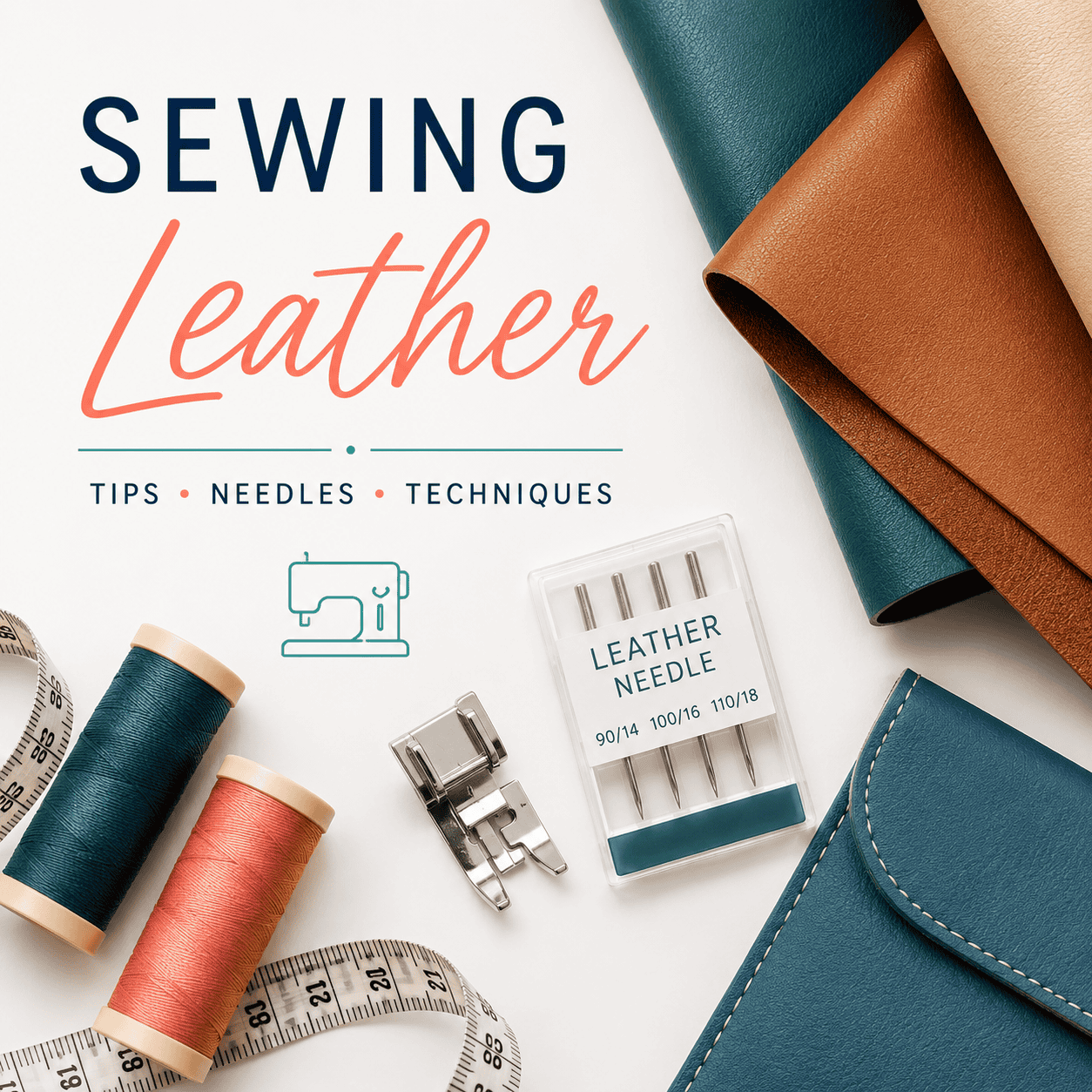
Best Needles for Sewing Leather
Choosing the correct needle is one of the most important parts of successfully sewing leather.
Leather needles are specially designed with a wedge-shaped point that cuts through leather cleanly instead of piercing it like a regular universal needle.
Leather Sewing Machine Needle Guide
| Leather Type | Recommended Needle | Suggested Size |
|---|---|---|
| Lightweight faux leather | Microtex or Leather Needle | 70/10 – 80/12 |
| Lightweight genuine leather | Leather Needle | 80/12 – 90/14 |
| Medium-weight leather | Leather Needle | 90/14 – 100/16 |
| Heavy leather | Leather Needle | 100/16 – 110/18 |
| Leather bags & straps | Heavy Duty Leather Needle | 100/16 – 110/18 |
Best Thread for Sewing Leather
For most leather sewing projects, polyester thread works best because it is:
- durable
- strong
- slightly flexible
- abrasion resistant
Heavy-duty topstitching thread can also create beautiful decorative seams on bags and accessories.
Avoid old or weak cotton thread when sewing leather since leather projects place more stress on seams.
Best Presser Feet for Sewing Leather
One of the most common problems when sewing leather is sticking.
Leather can drag under a standard presser foot, causing uneven stitches and feeding problems.
Helpful presser feet for sewing leather include:
These specialty feet help leather glide more smoothly through the machine and reduce skipped stitches or uneven feeding.
Learn How to Use a Roller Foot to Make Sewing Leather Easier
Best Stitch Length for Leather
When sewing leather, slightly longer stitches usually work best.
Small stitches can weaken leather by creating too many perforations close together.
Recommended Stitch Lengths:
- Lightweight leather: 3.0 mm
- Medium leather: 3.5 mm
- Heavy leather: 4.0 mm
Always test stitches on scraps before sewing your actual project.
Tips for Sewing Leather Successfully
Avoid Using Pins
Pins leave permanent holes in leather.
Instead, try:
Sew Slowly
Leather requires more control than lightweight fabrics.
Sewing slowly helps:
- prevent skipped stitches
- improve accuracy
- reduce shifting
Reduce Presser Foot Pressure
Sometimes reducing presser foot pressure helps the leather feed more evenly.
This is especially useful for:
- faux leather
- sticky finishes
- layered seams
Use a Hump Jumper for Thick Seams
When sewing over bulky seams or straps, a hump jumper can help keep your presser foot level.
This helps prevent:
- uneven stitches
- needle breakage
- skipped stitches
Common Problems When Sewing Leather
Skipped Stitches
Usually caused by:
- incorrect needle
- dull needle
- sewing too quickly
Solution:
Replace the needle and slow down your stitching speed.
Leather Sticking Under the Foot
Usually caused by:
- standard metal presser foot
- sticky leather surface
Solution:
Use a Teflon, roller, or walking foot.
Uneven Feeding
Usually caused by:
- multiple thick layers
- insufficient presser foot support
Solution:
Reduce bulk where possible and sew slowly.
Beginner Leather Sewing Projects to Try
Once you feel comfortable sewing leather, try these beginner-friendly projects:
- DIY Upcycled Leather Apron
- Replacing the Snaps on a Leather Vest
- Leather and Denim Tote Bag
- Upcycled Leather Fringe Earrings
Can You Sew Leather on a Regular Sewing Machine?
Yes, many lightweight and medium-weight leather projects can absolutely be sewn on a regular home sewing machine.
The key is:
- using the correct needle
- choosing the right thread
- sewing slowly
- avoiding overly thick layers
For extremely heavy leather or industrial projects, a heavy-duty machine may be necessary.
Give Sewing Leather a Try
Sewing leather may feel intimidating at first, but with the proper tools and techniques, it becomes much more manageable.
Start with simple projects, practice on scraps first, and don’t be afraid to slow down while learning.
Once you become comfortable sewing leather, you’ll be able to create beautiful bags, accessories, garments, and home décor projects with a professional finish.
Learn to Sew or Improve Your Sewing Skills
Do you want to start sewing but need a helping hand with the basics? Our Sewing 101 course has everything you need to start sewing confidently and improve your skills. Be sure to join our free private Facebook group.