
A seam gauge is one of those small sewing tools that many beginners overlook, but it can quickly become one of the most useful tools in your sewing room. While many sewists first use a seam gauge to measure hems, this simple tool can do much more. From pattern-making and seam allowances to button spacing and accurate fabric markings, a seam gauge can save time while helping you achieve more consistent results.
The adjustable slider lets you quickly set a measurement and repeat it repeatedly without constantly reaching for a ruler or tape measure. Whether you’re new to sewing or have years of experience, learning how to use a seam gauge properly can make everyday sewing tasks easier and more accurate.
What Is a Seam Gauge?
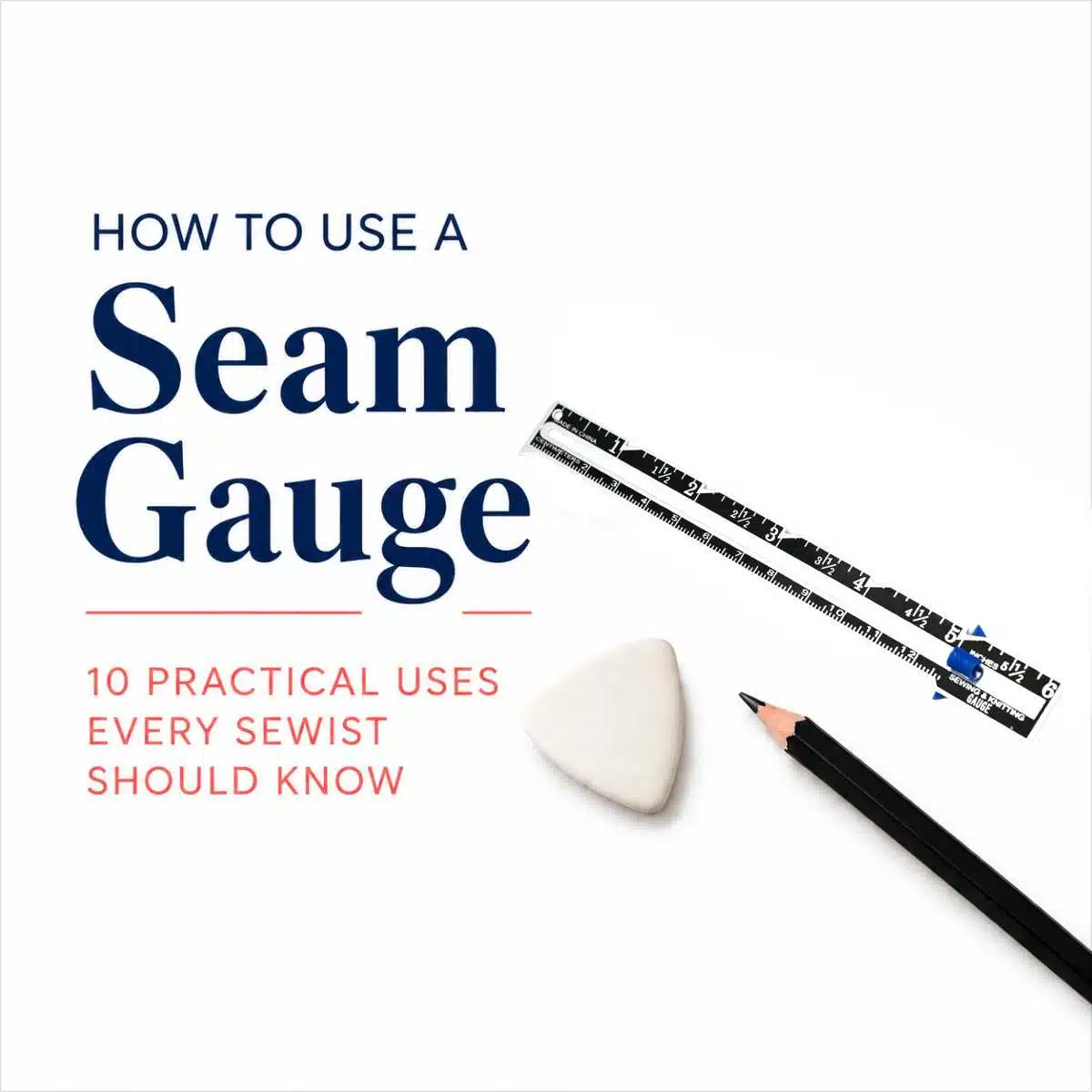
A seam gauge is a small measuring tool designed specifically for sewing and pattern work. It typically includes a narrow ruler with an adjustable sliding marker that can be moved to a specific measurement and held in place. Most seam gauges include both inches and metric measurements, making them useful for a wide variety of sewing projects.
Unlike larger rulers, which can feel awkward for small-area work, a seam gauge is designed for quick measuring and repetitive marking. It allows you to maintain accuracy without slowing down your workflow, which is why many sewists keep one beside their sewing machine or cutting area.
How to Adjust a Seam Gauge
Using a seam gauge is very simple once you understand how the adjustable marker works.
- Slide the marker to your desired measurement
- Lock or hold the slider in place
- Align the edge of the seam gauge with your fabric or pattern piece
- Mark, fold, or trace using the measurement you selected
Because the measurement stays consistent while you work, you can create evenly spaced markings quickly and with less chance of error.
10 Practical Uses Every Sewist Should Know
1. Measuring Hems
One of the most common uses of a seam gauge is measuring hems. Instead of repeatedly measuring a folded edge with a tape measure, you can set the seam gauge to your desired hem width and quickly check multiple areas as you work.
This helps create a more even hem around garments, curtains, skirts, sleeves, and other projects where consistency matters.
2. Marking Seam Allowances
Accurate seam allowances are important for proper garment construction. A seam gauge makes it easy to mark common measurements like ¼”, ⅜”, ½”, and ⅝” without needing multiple rulers.
Using the seam gauge repeatedly along the edge of your fabric creates even markings that help maintain accuracy while sewing.
3. Adjusting Pattern Pieces
A seam gauge can also be useful during pattern making and pattern adjustments. In this example, I used the gauge to increase a circular pattern piece by 1 inch while maintaining an even distance around the curve.
The same technique works for straight edges as well, making it a useful tool when increasing or decreasing pattern pieces.
4. Creating Even Button Spacing
Button placement can look uneven very quickly if measurements shift slightly. A seam gauge allows you to repeatedly measure and mark equal spacing so your buttons stay evenly aligned.
This works especially well for shirts, dresses, and cuffs.
5. Marking Pleats
Pleats require consistency for a clean finished appearance. By setting a seam gauge to the desired measurement, you can quickly mark fold lines and placement points throughout your project.
6. Checking Fabric Folds
Whether you’re pressing hems, preparing cuffs, or folding fabric edges, a seam gauge provides a quick way to ensure the folded amount remains consistent.
7. Measuring Casings
Elastic and drawstring casings need enough space to function properly. A seam gauge helps verify the folded width before stitching.
8. Spacing Topstitching
Decorative topstitching looks cleaner when it remains evenly spaced. A seam gauge can be used as a quick visual guide to help maintain consistent stitching distances.
9. Marking Darts and Tucks
Darts and tucks help shape garments and create a better fit. A seam gauge makes it easier to transfer accurate measurements to fabric before sewing.
10. Measuring Bias Tape and Binding Widths
Bias binding often requires precise folding and measuring. A seam gauge helps ensure even widths throughout the process.
Common Seam Gauge Mistakes
Even though a seam gauge is easy to use, there are a few mistakes beginners commonly make. Forgetting to secure the slider, measuring from the wrong edge, or allowing the tool to shift while marking can lead to uneven results.
Taking a few extra seconds to double-check your measurements before marking fabric or patterns can prevent frustration later.
A Small Yet Mighty Tool
A seam gauge may be a small sewing tool, but it can quickly become one of the hardest-working tools in your sewing room. From measuring hems and seam allowances to making pattern adjustments and creating evenly spaced markings, there are countless practical ways to use it.
If you already own a seam gauge, try experimenting with a few of these techniques on your next project. You may find yourself reaching for it much more often than you expected.
Basic Sewing Tools for Most Sewing Projects
There are a few other tools you’ll want to have on hand for most sewing projects. We have a detailed list, including how to use them, in the article “Basic Sewing Tools and Supplies.”
Learn to Sew or Improve Your Sewing Skills
Do you want to start sewing but need a helping hand with the basics? Our Sewing 101 course has everything you need to start sewing confidently and improve your skills. Be sure to join our free private Facebook group.