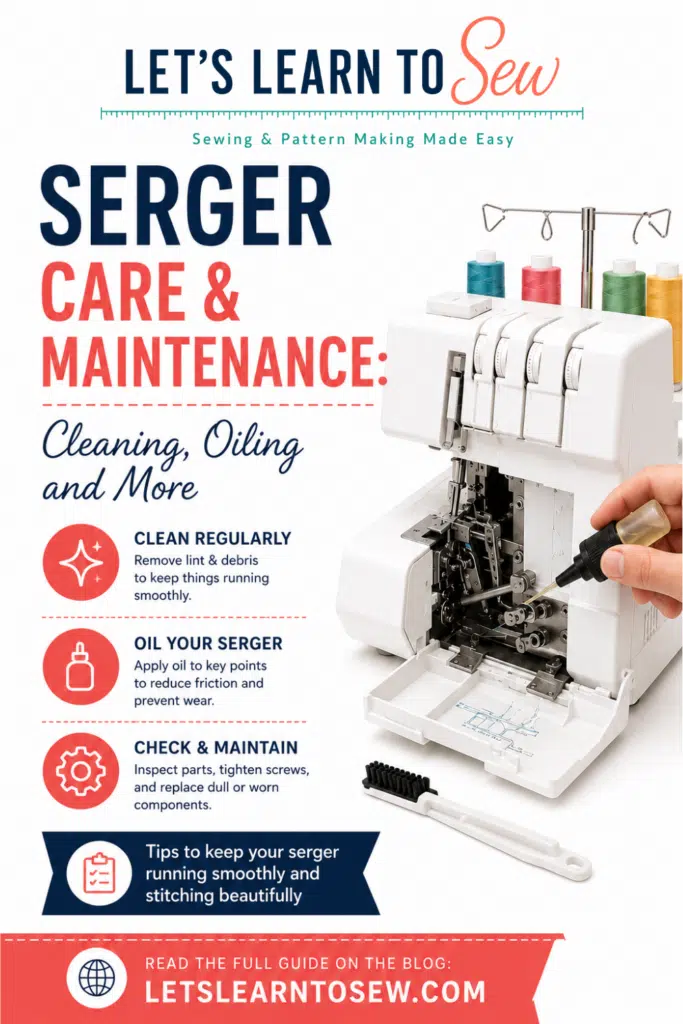

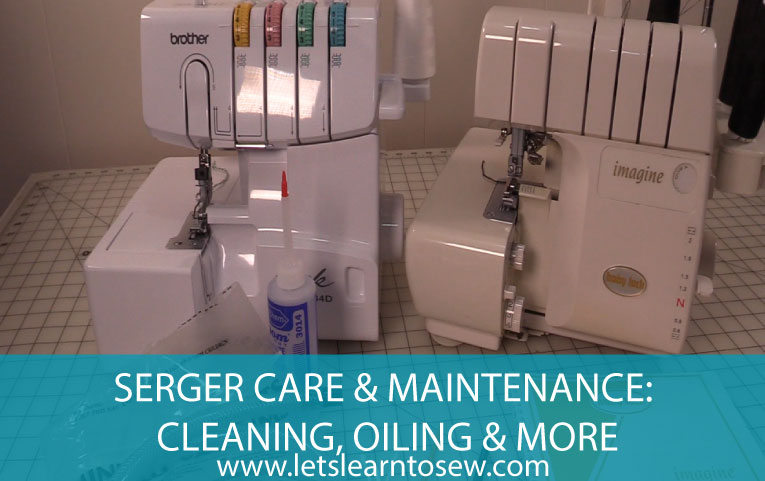
Proper serger maintenance is one of the most important things you can do to keep your machine running smoothly and stitching beautifully. Regular cleaning and oiling help prevent skipped stitches, tension issues, thread breakage, and costly repairs while extending the life of your serger.
Because sergers trim fabric as they sew, they create a surprising amount of lint and fabric dust. That lint gets pulled into the machine’s moving parts, where oil naturally attracts it. Over time, the lint absorbs oil, which can cause parts to dry out, wear prematurely, or even seize.
The good news? A simple maintenance routine only takes a few minutes and can help your serger perform like new for years. If you’re new to using a serger, be sure to check out our complete Serger Course, where we walk through threading, tension, troubleshooting, stitches, and beginner-friendly serger techniques step-by-step.
Supplies for Serger Cleaning & Maintenance
Before you begin, gather a few basic supplies:
- Small screwdriver that fits your needle screws
- Needle threader or dental floss threaders (helpful for threading serger needles)
- Mini vacuum attachment or handheld vacuum
- Small stiff-bristled brush or the brush included with your serger
- Paper towels or lint-free cloths
- Cotton swabs
- Glass cleaner such as Windex (for exterior surfaces only)
- Sewing machine oil approved for your serger
- New serger needles
How to Clean a Serger
Cleaning your serger regularly is the best way to prevent lint buildup and keep everything operating smoothly.
1. Unplug the Machine
Always unplug your serger before cleaning or performing maintenance.
2. Open the Serger Covers
Open the front and side covers to expose the loopers, feed dogs, and cutting area where lint collects most heavily.
3. Remove Lint & Fabric, Dust
Use a small brush to loosen lint and debris from around the feed dogs, knife area, loopers, and tension mechanisms.
A mini vacuum attachment works great for removing loose lint, but avoid canned compressed air. Blowing air into the machine can push lint deeper inside the serger.
4. Clean the Knife Area
Fabric fibers tend to collect around the upper and lower knives. Carefully brush away debris so the blades continue cutting cleanly.
If your fabric edges start looking ragged or uneven, your knives may need replacing or sharpening.
5. Wipe Down the Exterior
Use a soft cloth lightly sprayed with glass cleaner to wipe fingerprints and dust from the outside of the machine. Avoid spraying cleaner directly onto the serger.
How Often Should You Clean a Serger?
A good rule of thumb is to brush out lint after every project and do a more detailed cleaning every 8–10 hours of serging.
If you frequently sew fleece, flannel, minky, batting, or other lint-heavy fabrics, you may need to clean your serger even more often.
Oiling Your Serger
Not every serger requires oiling, so always check your owner’s manual first. Some newer machines are designed with sealed bearings and should not be oiled by the user.
Your manual will tell you:
- Whether your serger needs oil
- Which oil to use
- Where to apply oil
- How often to oil the machine
The standard recommendation for machines that require oiling is to oil every 8–10 hours of serging, or whenever you hear unusual metallic scraping sounds.
I personally like to oil my serger each time I do a deep cleaning. It only takes a minute and helps keep everything running smoothly.
Important Oiling Tips
- Only use sewing machine oil approved for sergers
- Apply just 1–2 drops per oiling point
- Wipe away excess oil
- Run the machine on scrap fabric after oiling to prevent oil stains on projects
Changing Serger Needles
One of the most overlooked parts of serger maintenance is regularly changing the needles.
A bent, dull, or nicked needle can cause:
- Skipped stitches
- Thread breakage
- Uneven stitches
- Fabric damage
- Tension problems
In severe cases, damaged needles can even throw the serger timing off.
Just like with a sewing machine, fresh needles make a huge difference in stitch quality.
My dealer recommended changing serger needles every 8–10 hours of serging when I bought my Babylock Imagine over 15 years ago. I’ve followed that advice along with regular cleaning and maintenance, and I’ve never had any major issues with my machine.
Signs Your Serger Needs Maintenance
Watch for these warning signs that your serger may need cleaning, oiling, or fresh needles:
- Skipped stitches
- Excessive lint buildup
- Metallic scraping sounds
- Uneven cutting
- Thread breaking repeatedly
- Poor stitch quality
- Difficulty feeding fabric smoothly
Addressing these small issues early can help prevent larger repairs later.
Frequently Asked Questions About Serger Maintenance
Do sergers need to be serviced professionally?
Yes. Even with regular at-home maintenance, it’s a good idea to have your serger professionally serviced every 1–2 years, depending on how often you sew.
Can I use canned air to clean my serger?
It’s generally not recommended. Compressed air can force lint deeper into the machine instead of removing it.
What oil should I use on my serger?
Only use sewing machine oil recommended by your serger manufacturer.
How often should serger needles be changed?
Most experts recommend changing needles every 8–10 hours of serging or at the first sign of stitch issues.
Final Thoughts
A few minutes spent cleaning and maintaining your serger can save you hours of frustration later. Regular maintenance helps your machine stitch more smoothly, last longer, and produce cleaner, more professional results.
Want to become more confident using your serger? Our complete Serger Course teaches everything from threading and tension to troubleshooting and beginner-friendly techniques.
If you’re thinking about buying a new serger, be sure to read our guide on choosing the best serger for your sewing needs.