
Not sure which zipper foot to use on your sewing machine? You’re not alone. This is one of the most common questions beginners have when learning to sew. With so many options like the all-purpose zipper foot, invisible zipper foot, and narrow zipper foot, it can feel confusing to know which one you actually need. In this guide, I’ll break down the most important types of zipper feet, when to use each, and how to achieve clean, professional-looking results every time.
One of the sewing machine feet I’m most often asked to demonstrate is the zipper foot. It sounds simple enough, but did you know there are several types of sewing machine zipper feet, each designed for a specific purpose?
This article (and video) is the first in a series all about sewing machine feet. Today, we’re breaking down the most common zipper feet and when to use each one so you can sew zippers with confidence.
What are the different types of zipper feet?
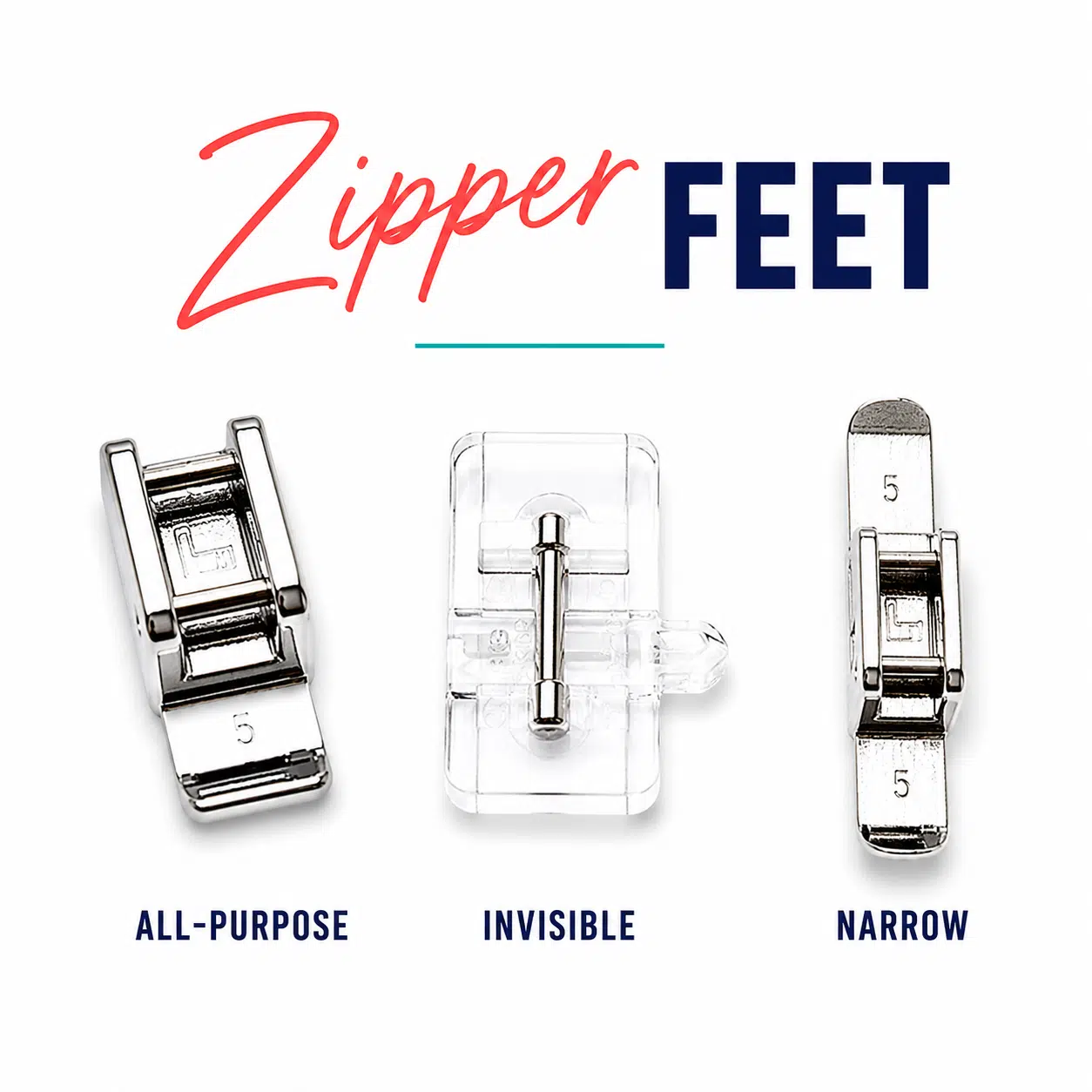
The three most common types of sewing machine zipper feet are the all-purpose, invisible, and narrow zipper feet. The all-purpose zipper foot is adjustable and used for most standard zippers. The invisible zipper foot is designed to install concealed zippers for a clean, hidden finish. The narrow zipper foot allows you to sew very close to zipper teeth or raised edges for more precise stitching.
Do you need a special foot to sew a zipper?
While you can sew a zipper with a regular presser foot, using a zipper foot makes the process much easier and more accurate. Zipper feet allow you to sew close to the zipper teeth, which helps create a clean and professional finish.
Now that you know the basics, let’s look at each type of zipper foot and when to use it.
Where are Zippers Used?
Zippers are used in a wide variety of sewing projects, especially in garment sewing and home décor.
You’ll most commonly find zippers in:
- Pants and jeans
- Skirts and dresses
- Jackets and outerwear
- Bags and purses
- Pillow covers and cushions
Traditionally, zippers were hidden inside seams for a clean, polished look. However, in recent years, exposed zippers have become more popular in modern sewing and fashion design.
When sewing an exposed zipper, I personally love using one with a decorative edge, but a standard zipper works just fine too.
Types of Zipper Feet (And When to Use Them)
Understanding the different types of zipper feet will make your sewing much easier—and your finished projects look more professional.
All-Purpose Zipper Foot
The all-purpose zipper foot is the one that typically comes with your sewing machine.
It’s designed to be adjustable so you can sew on either side of the zipper teeth. To use it, you simply move your needle position to the left or right, depending on which side you’re stitching.
Best for:
- Standard zipper installation
- Beginner-friendly projects
- General sewing tasks
This is a great starting point if you’re new to sewing zippers.
Invisible Zipper Foot
The invisible zipper foot (also called a concealed zipper foot) is specifically designed for installing invisible zippers.
This foot has grooves on the underside that help guide the zipper coils, allowing you to stitch very close to the zipper teeth for a clean, hidden finish. Our article, How to Sew an Invisible Zipper takes you step by step through the process.
Best for:
- Dresses and skirts
- Formal wear and evening gowns
- Pillow covers and home décor
If you want your zipper to completely disappear into the seam, this is the foot to use.
Narrow Zipper Foot
The narrow zipper foot is designed for precision sewing in tight spaces.
Its slim shape allows you to stitch very close to zipper teeth, cording, piping, or other raised edges that a standard foot might struggle with.
Best for:
- Installing regular zippers
- Sewing close to bulky or raised areas
- Detailed or tight sewing spaces
This foot gives you more control when accuracy really matters.
Tips for Sewing Zippers Successfully
No matter which zipper foot you use, these tips will help you get better results:
- Go slow—especially near zipper teeth
- Use the correct needle position
- Press your fabric before sewing
- Test on scrap fabric first
- Choose the right foot for the job
Using the correct zipper foot can make a huge difference in how your project turns out.
Did I Leave Any Zipper Feet Out?
Did you know there were so many different types of sewing machine zipper feet and ways to use them?
If there’s a zipper foot you use that I didn’t mention, I’d love to hear about it! Let me know in the comments below or join the conversation in our private Facebook group.
Want to Learn More?
If you’re looking to master more sewing machine feet, be sure to check out our growing collection of tutorials and videos under Sewing Machine Feet.