
Learn how to sew knit fabrics successfully with the right needles, stitches, tools, and techniques. Whether you’re making T-shirts, leggings, pajamas, or stretchy garments, this guide will help you avoid common frustrations and achieve professional-looking results.
Knit fabrics are one of the most comfortable and versatile materials you can sew. They’re used for everything from T-shirts and pajamas to leggings, dresses, and activewear. However, many sewists avoid knits because they stretch, curl, shift, and sometimes seem impossible to control.
The good news? Sewing knit fabric is much easier once you understand a few basics.
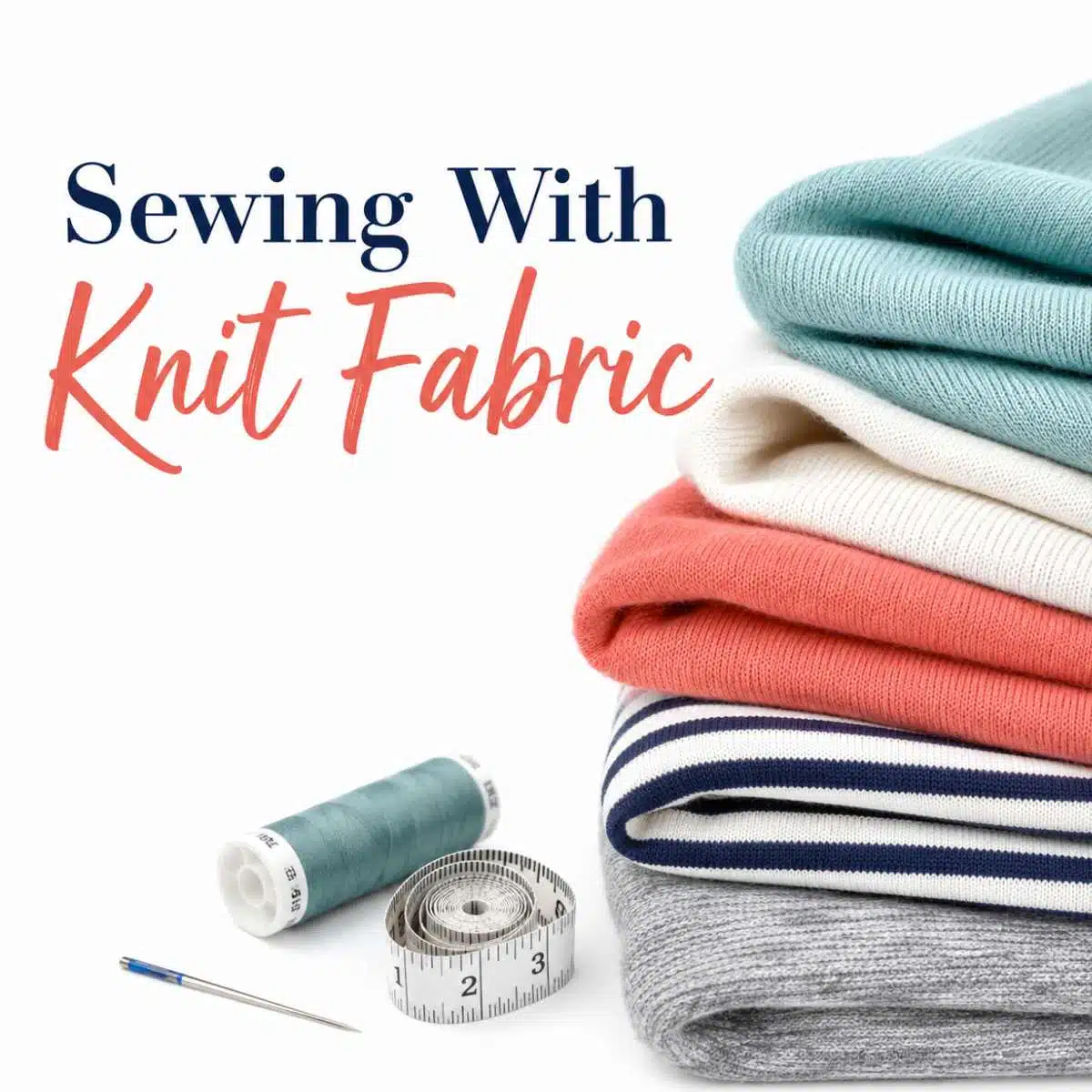
In this guide, you’ll learn:
- What knit fabric is
- The best needles for knit fabrics
- Recommended stitches and settings
- Helpful tools and supplies
- Common mistakes to avoid
- Whether you need a serger
What is the best way to sew knit fabric?
The best way to sew knit fabric is to use a ballpoint or stretch needle, quality polyester thread, and a stretch-friendly stitch such as a narrow zigzag or lightning bolt stitch. Avoid pulling the fabric while sewing and always test settings on fabric scraps before beginning your project.
What is knit fabric?
Knit fabric is made by looping yarn together rather than weaving threads over and under each other. This construction creates natural stretch and flexibility, making knit fabrics ideal for comfortable garments.
Common knit fabrics include:
- Jersey knit
- Rib knit
- Interlock knit
- Ponte knit
- French terry
- Double-brushed polyester (DBP)
- Athletic knit
- Sweater knits
Some knit fabrics stretch in:
- One direction
- Two directions
- Four directions
Understanding stretch percentage is important because many patterns require a certain amount of stretch for proper fit.
→ How to Measure Fabric Stretch Percentage
Knit Fabric vs Woven Fabric
| Knit Fabric | Woven Fabric |
|---|---|
| Naturally stretches | Little or no stretch |
| Created with loops | Created with woven threads |
| Soft and flexible | More structured |
| Uses stretch stitches | Uses straight stitches |
| Common in garments | Common in bags and home décor |
Why can knit fabric be difficult to sew?
Knit fabrics can be challenging because their stretch often causes them to shift, curl, or stretch while sewing. However, most problems happen because of incorrect needles, stitch settings, or sewing techniques.
Common issues include:
- Wavy seams
- Skipped stitches
- Curled edges
- Popped stitches
- Uneven hems
- Fabric stretching out
What needle should you use for knit fabric?
Most knit fabrics sew best with a ballpoint or stretch needle because these needles slide between fibers rather than piercing them. Using the wrong needle often causes skipped stitches, holes, and frustration.
Knit Fabric Needle Quick Guide
| Knit Fabric | Needle Type | Size |
|---|---|---|
| Lightweight jersey | Ballpoint | 70/10–75/11 |
| T-shirt knit | Ballpoint | 80/12 |
| Stretch knits with spandex | Stretch needle | 75/11–90/14 |
| Ponte knit | Stretch needle | 80/12–90/14 |
| French terry | Ballpoint | 80/12–90/14 |
| Rib knit | Stretch needle | 75/11–80/12 |
| Heavy sweater knits | Ballpoint | 90/14 |
Signs you need a different needle
- Skipped stitches
- Snagged fabric
- Uneven stitching
- Holes in fabric
- Popping sounds while sewing
Amazon Product Opportunities:
- Schmetz Stretch Needles
- Schmetz Ballpoint Needles
- Organ Stretch Needles
What thread works best for knit fabric?
Polyester thread is usually the best choice for knit fabrics because it offers a balance of flexibility and strength. Cotton thread often has less stretch and can break more easily when used on stretchy garments.
Recommended: Quality polyester thread
Avoid:
- Old thread
- Cheap thread
- Heavy-duty thread unless needed
Internal Link Opportunity:
→ Ultimate Sewing Thread Guide
What stitch should you use for knit fabric?
The best stitch for knit fabric is any stitch that allows the fabric to stretch after sewing. A regular straight stitch can break when the fabric stretches.
Recommended stitches include:
Narrow Zigzag Stitch
Settings:
- Width: 0.5–1.5
- Length: 2–2.5
Works well for:
- T-shirts
- Basic garment construction
- General knit sewing
Lightning Bolt Stitch
Best for:
- Stretch fabrics
- Athletic fabrics
- Leggings
Triple Stretch Stitch
Best for:
- High-stress seams
- Athletic wear
- Children’s clothing
Twin Needle Stitch
Twin needles create professional-looking hems by producing:
- Two rows of stitching on top
- Zigzag stitches underneath
Perfect for:
- T-shirt hems
- Sleeve hems
- Knit dresses
→ Want professional hems? Learn how to use a twin needle for stretchy fabrics.
Can you sew knit fabric on a regular sewing machine?
Yes. Knit fabric can absolutely be sewn using a regular sewing machine. You simply need the proper needle and stitch settings.
Many sewists successfully sew knit garments for years without owning a serger.
Should you use a serger for knit fabrics?
You do not need a serger to sew knit fabrics, but it can make sewing faster and produce more professional-looking finishes.
Benefits of using a serger:
- Faster sewing
- Professional seam finishes
- Built-in stretch stitches
- Trims and finishes seams simultaneously
Knits are one of the areas where sergers shine.
Perfect serger projects include:
- T-shirts
- Pajamas
- Lounge wear
- Leggings
- Baby clothing
Ready to finally learn your serger?
If your serger is still sitting in the box or collecting dust, our Serger Course walks you through:
- Threading your machine
- Understanding differential feed
- Adjusting tension settings
- Beginner-friendly projects
- Professional finishing techniques
What tools help when sewing knit fabric?
The most helpful tools for sewing knit fabrics include:
- Walking foot
- Wonder Clips
- Wash Away Wonder Tape
- Twin needle
- Rotary cutter and cutting mat
Walking Foot
The walking foot is a specialized sewing machine presser foot designed to feed multiple layers of fabric evenly through the machine. Unlike a standard presser foot, a walking foot uses its own set of feed dogs to work in conjunction with the sewing machine’s feed dogs, helping prevent fabric layers from shifting, stretching, or puckering. This makes it especially useful when quilting, matching plaids or stripes, sewing slippery fabrics, or working with thick materials such as denim, canvas, leather, and quilt sandwiches. Many walking feet also include a quilting guide and quilting bar, making it easier to sew evenly spaced lines and achieve professional-looking results. Whether you’re a beginner learning to quilt or an experienced sewist tackling challenging fabrics, a walking foot can improve stitch quality and provide smoother, more consistent feeding throughout your project.
Wonder Clips
Sewing clips reduce distortion compared to pins. I do have several containers of them, but I don’t use them as frequently as I do pins. That’s mostly because I was taught using pins and am just in the habit of reaching for my pincushion.
Wash Away Wonder Tape
Wash Away quilting or sewing tape is a handy tool that helps hold fabric, paper, and other materials in place while you sew. With strong yet temporary adhesion, it is ideal for tasks such as quilting, appliqué placement, positioning patch pockets, aligning zippers, and keeping layers from shifting during construction. Unlike traditional pins, sewing tape lies flat and eliminates the risk of fabric distortion. Many wash-away sewing tapes can be stitched through and do not need to be removed before sewing. Once your project is complete, the tape dissolves in water without leaving behind residue. Whether you’re a beginner looking for more accurate results or an experienced sewist seeking a faster, more precise method, double-sided sewing tape can make many sewing and crafting projects easier. Follow the directions that come with the brand you buy because instructions do vary a bit between brands.
Rotary Cutter and Mat
Helps prevent shifting while cutting.
Helpful Articles for Sewing with Knits
- Sewing Machine Feet Guide
- Using a Rotary Cutter
- How to Care for a Cutting Mat
Tips for cutting knit fabric
- Keep the fabric fully supported on the table
- Use pattern weights when possible
- Cut single layers for slippery fabrics
- Pay attention to the stretch direction
- Test fabric behavior before cutting
Common mistakes when sewing knit fabric
Pulling fabric while sewing
Allow the machine to feed naturally.
Using the wrong needle
Skipped stitches are frequently needle-related.
Ignoring stretch percentage
Pattern fit depends on the correct amount of stretch.
Stretching hems during sewing
Stretching fabric often creates wavy edges.
Skipping test stitches
Always test settings on scraps first.
What is the easiest knit fabric for beginners?
Ponte knit and French terry are usually the easiest knit fabrics for beginners because they are more stable and less likely to curl than lightweight jersey fabrics.
Beginner projects include:
- Pajama pants
- Lounge shorts
- T-shirts
- Headbands
- Simple skirts
- Pajama sets
Frequently Asked Questions
Why does knit fabric get wavy when sewing?
Wavy seams usually happen because the fabric stretches during sewing, the presser foot pressure is too high, or incorrect stitch settings are being used.
Do I need a serger for knit fabric?
No. A regular sewing machine with the correct needle and stitch settings can sew knit fabric successfully.
What needle should I use for knit fabric?
Most knit fabrics use either a ballpoint or stretch needle.
Give Knit Fabric a Try!
Knit fabric can seem intimidating at first, but the right needle, stitch settings, and techniques make a huge difference. Start with beginner-friendly knit fabrics, test your settings first, and practice on scraps before moving into full projects.
Soon you’ll be confidently sewing comfortable T-shirts, pajamas, dresses, and stretchy garments.