
Learn how to use a walking foot sewing machine attachment, when to reach for it, and why it can completely change the way you sew difficult fabrics. Whether you’re quilting, sewing knits, matching plaids, or working with slippery fabric, this guide will help you get better results.
This post contains affiliate links. If you purchase through one of these links, I may earn a small commission at no extra cost to you. I only recommend tools I actually use and trust. Learn more on my Affiliate Disclosure page.
What Is a Walking Foot?
A walking foot is a sewing machine presser foot designed to feed the top layer of fabric through the machine at the same rate as the bottom layer. Unlike a standard presser foot, a walking foot sewing machine attachment uses its own built-in feed mechanism, sometimes called “even feed,” that helps prevent shifting, stretching, and uneven seams.
Think of it this way: your machine’s feed dogs already move the bottom layer of fabric forward. A walking foot adds a matching feed mechanism on top, so both layers travel together instead of one dragging behind the other.
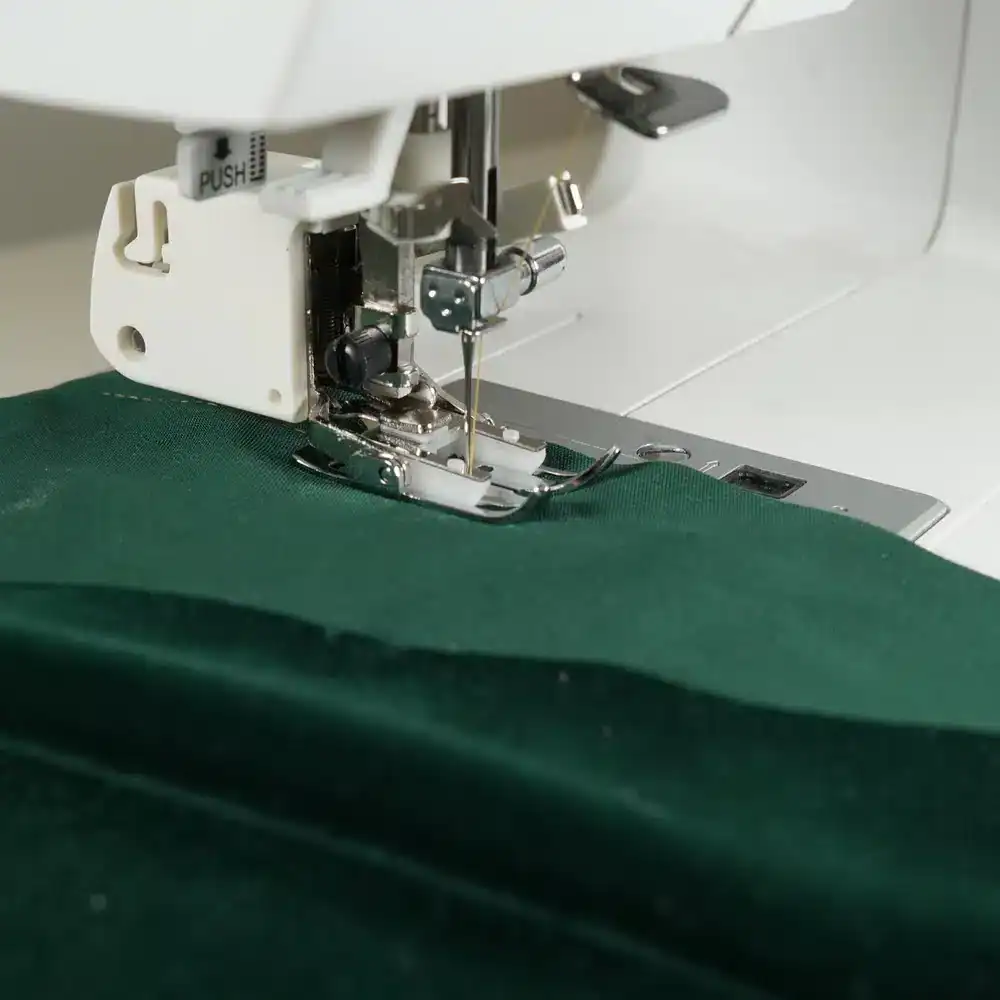
What Does a Walking Foot Do?
A walking foot helps move multiple layers of fabric evenly while you sew. Benefits include:
- Reduces fabric shifting
- Prevents puckering
- Helps match stripes and plaids
- Reduces stretching on knit fabrics
- Improves quilting accuracy
- Creates smoother, more even seams
What Fabrics Should You Use a Walking Foot For?
A walking foot for quilting and garment sewing is especially helpful with fabrics that tend to shift, stretch, or slide. Common examples include:
- Knit fabrics
- Quilting cotton (especially with batting sandwiched between layers)
- Fleece
- Denim
- Plaids
- Stripes
- Velvet
- Minky fabric
- Faux leather
- Any project with multiple fabric layers
When Should You Use a Walking Foot?
Use the foot whenever your fabric layers are feeding unevenly. Common projects include:
- Quilting projects
- Sewing knit garments
- Matching seams and plaids
- Sewing denim
- Sewing slippery or synthetic fabrics
- Topstitching thick materials
Not sure which sewing machine foot to use for your project? Explore our complete Sewing Machine Feet Guide Hub; learn about zipper feet, walking feet, rolled hem feet, invisible zipper feet, and more.
How Do You Install a Walking Foot?
Installing a walking foot is usually simple, although the exact process varies slightly between sewing machine brands (Brother, Singer, Janome, and Bernina all have small variations; check your manual if your foot doesn’t attach exactly as described below).
Step 1: Remove your regular presser foot. Raise the presser foot lever and remove your current foot.
Step 2: Remove the presser foot holder (if needed). Most walking feet attach directly to the machine’s shank rather than the standard foot holder.
Step 3: Position the walking foot arm. Place the walking foot onto the machine and position the fork-shaped arm above the needle clamp screw. This is the step most beginners get wrong; if the arm isn’t seated correctly over the screw, the foot will not feed properly.
Step 4: Tighten the screw. Secure the walking foot using the included screw. Make sure it’s snug; a loose foot can wobble while sewing.
Step 5: Test on scrap fabric. Always sew a test seam on scrap fabric (ideally the same fabric as your project) before starting.
Walking Foot Installation Quick Guide
| Step | Action |
|---|---|
| 1 | Remove regular presser foot |
| 2 | Remove foot holder |
| 3 | Place walking foot arm over needle screw |
| 4 | Tighten attachment screw |
| 5 | Test stitch on scrap fabric |
How Do You Sew With a Walking Foot?
- Attach the walking foot
- Select your stitch
- Place the fabric under the foot
- Lower the presser foot
- Begin sewing slowly
- Let the machine feed the fabric naturally
Avoid pulling the fabric while sewing. The whole point of the walking foot is that it does the feeding for you.
Common Walking Foot Mistakes
Pulling fabric while sewing. Let the machine move the fabric. Pulling can cause skipped stitches or throw off your seam allowance.
Sewing too fast. Walking feet work best at moderate speeds. Sewing too quickly can cause the foot to feed unevenly, defeating its purpose.
Forgetting to test stitches. Different fabrics, especially thicker or stretchier ones, may require adjustments to tension or stitch length. Always test first.
Installing the foot incorrectly. If the fork-shaped arm isn’t positioned correctly over the needle clamp screw, the foot will not function properly, and may not feed at all.
Troubleshooting
My fabric isn’t feeding evenly. Double-check the installation: the fork arm needs to sit directly over the needle clamp screw. Also, check that your presser foot pressure isn’t set too high or too low for your fabric weight.
My machine is skipping stitches with the foot attached. This is often a needle issue rather than a foot issue. Try a fresh needle appropriate for your fabric (a stretch needle for knits, a denim needle for heavier wovens), and confirm the foot is fully seated and screwed in tight.
The walking foot is making noise or feels like it’s “stepping.” Some noise and a visible up-and-down “walking” motion is completely normal; that’s the feed mechanism doing its job. If it sounds like grinding or catching, stop and re-check the installation.
Can I use a walking foot on a low-end or entry-level machine? In most cases, yes, as long as the foot is compatible with your machine’s shank type (low, high, or slant). Check your machine’s manual or the foot’s packaging before buying.
Walking Foot vs. Regular Presser Foot
| Walking Foot | Regular Presser Foot |
|---|---|
| Feeds top and bottom fabric | Feeds bottom fabric only |
| Reduces shifting | May allow shifting |
| Better for thick or layered fabrics | Better for general sewing |
| Great for quilting | Everyday use |
Frequently Asked Questions
Do I need a walking foot? No, but a walking foot can significantly improve results when sewing difficult fabrics or multiple layers.
Can you quilt without a walking foot? Yes, but many quilters prefer a walking foot because it helps prevent shifting and puckering between the quilt top, batting, and backing.
Can you use a walking foot for knit fabrics? Yes. Walking feet work especially well for knit fabrics because they help prevent stretching while sewing. See our full Sewing With Knit Fabric Guide for more knit-specific tips.
Can I use a zigzag stitch with a walking foot? Usually yes, but always verify the stitch width works with your specific foot; some walking feet have a narrower opening than others.
Does a walking foot work on all sewing machines? Most walking feet are designed for a specific shank type (low, high, or slant). Always check compatibility with your machine before purchasing.
Helpful Tools for Walking Foot Sewing
As an Amazon Associate, I earn from qualifying purchases.
- Walking Foot
- Wonder Clips
- Quilting Gloves
- Quilting Ruler
- Schmetz Stretch Needles
- Rotary Cutter and Mat
Related Articles
- Sewing Machine Feet Guide Hub — start here if you’re not sure which foot to use
- How to Sew Knit Fabric
- Sewing Denim Guide
- Ultimate Sewing Thread Guide
- Mistakes to Avoid Before Cutting Fabric
This Foot Is a Must-Have Sewing Machine Accessory
A walking foot may seem like a small accessory, but it can make a huge difference in your sewing results. From quilting and denim to knit fabrics and layered projects, this presser foot helps feed fabric evenly and reduces frustration, especially once you know how to install and use it correctly.
Once you start using one, it often becomes a tool you reach for again and again.