
Velvet is one of the most luxurious fabrics you can sew, but it can also be one of the most intimidating. Its soft pile, rich texture, and tendency to shift during sewing make it unique compared to cotton, linen, or quilting fabrics.
The good news is that sewing velvet becomes more manageable once you learn how the fabric behaves. By selecting the right needle, using proper cutting methods, and making simple sewing adjustments, you can sew beautiful garments, costumes, home décor, and accessories with confidence.
In this guide, we’ll cover everything you need to know about sewing with velvet, including the best needles, machine settings, cutting tips, pressing methods, and common mistakes to avoid.
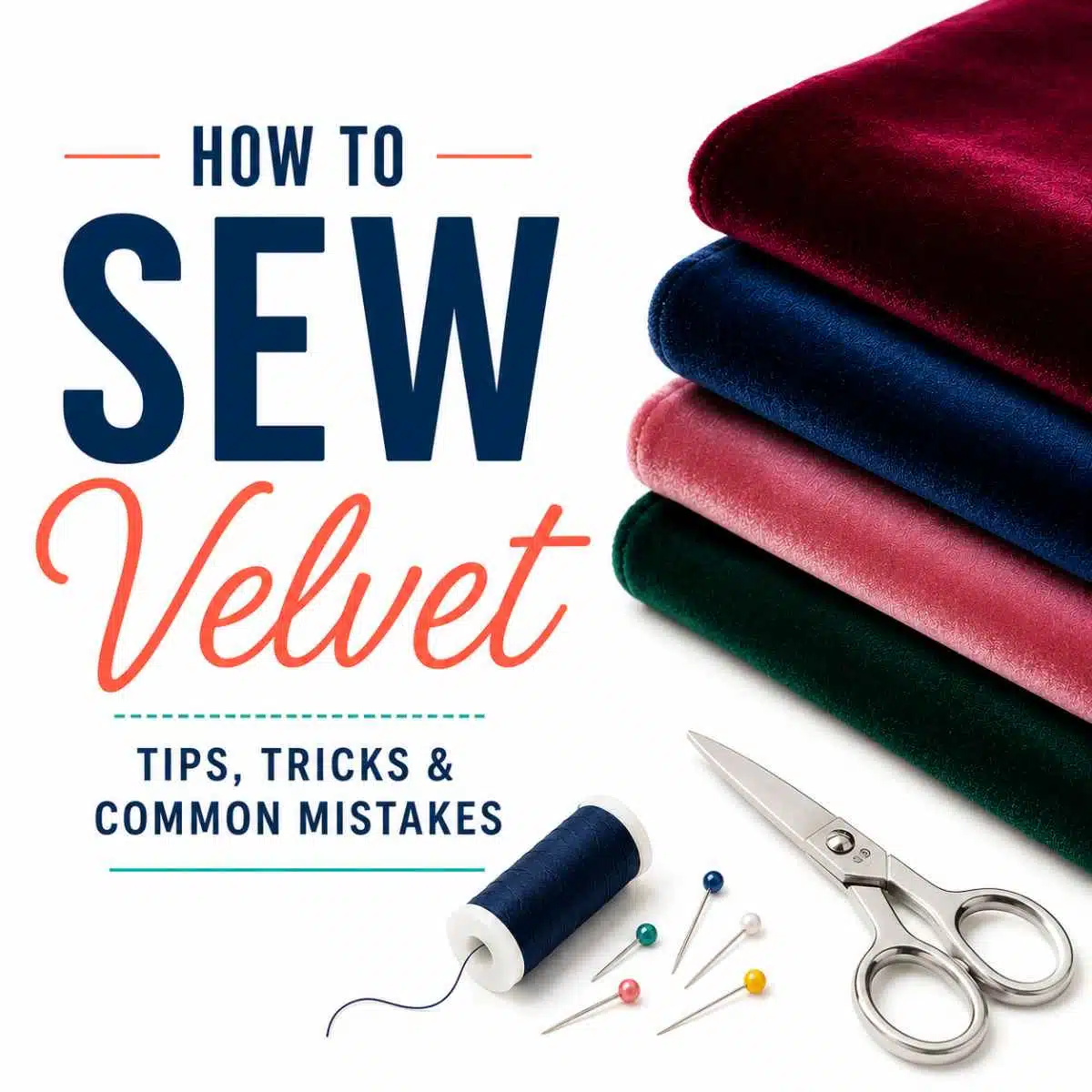
Before we dive into sewing techniques, let’s start by understanding what velvet actually is.
Velvet is a woven fabric with a dense, soft pile that creates its signature soft plush texture. Traditional velvet was made from silk, but modern velvet is commonly made from polyester, rayon, cotton, or blended fibers.
The raised pile reflects light differently depending on its direction, which gives velvet its luxe appearance and subtle color variations.
Velvet is commonly used for:
- Dresses
- Jackets and coats
- Formal wear
- Costumes
- Holiday sewing projects
- Pillows and home décor
- Bags and accessories
Now that you know what velvet is, let’s explore why it can be tricky to sew.
Many sewists struggle with velvet because the pile causes the layers of fabric to slide against each other.
Common challenges consist of fabric shifting while cutting.
- Seems that won’t stay aligned
- Uneven hems
- Crushed pile from pressing
- Visible needle marks
- Stretching during sewing
Fortunately, these issues can be minimized with proper preparation and sewing techniques.
Velvet Needle Guide
Choosing the correct needle is one of the most important steps when sewing velvet.
| Lightweight Velvet | Universal Needle | 70/10 – 80/12 |
| Polyester Velvet | Microtex Needle | 80/12 |
| Rayon Velvet | Microtex Needle | 70/10 – 80/12 |
| Stretch Velvet | Ballpoint or Stretch Needle | 75/11 – 90/14 |
| Heavy Velvet | Microtex Needle | 90/14 |
If your machine skips stitches or damages the pile, replace the needle immediately.
Related: Sewing Machine Needle Guide. What thread should you use for velvet?
For most velvet projects, quality polyester thread will give you the best results. As always, test your stitches and see if you like the look that the thread gives you.
Polyester thread provides strength, flexibility, reduced breakage, and better durability for garments.
Cotton thread may work for lightweight cotton velvet, but polyester thread is generally the most versatile option.
Preparing Velvet Before Sewing
Before cutting your fabric:
Check the Nap Direction
Velvet has a nap, which means the pile runs in a specific direction. Run your hand over the fabric: in one direction, it feels smooth, and in the opposite direction, it feels rougher. Lay all pattern pieces in the same direction to ensure even color and texture.
Use a Large Cutting Surface
Avoid hanging velvet off the edge of your cutting table. The weight of the fabric can distort pieces and create inaccurate cuts.
Cut in a Single Layer
Because velvet shifts easily, many sewists prefer to cut pattern pieces in a single layer rather than fold the fabric. This technique increases cutting accuracy and prevents distortion.
How to Mark Velvet Fabric
Avoid traditional tracing wheels because they can permanently damage the pile.
Instead use:
- Tailor’s chalk
- Washable fabric markers
- Thread tracing
- Clips instead of pins
Always test marking tools on a scrap of fabric first.
Best Sewing Machine Settings for Velvet
Most velvet projects sew well using:
- Straight stitch
- Stitch length: 2.5–3.0 mm
- Slightly reduced presser foot pressure
- Walking foot when available
A walking foot helps feed both layers evenly and reduces shifting.
Related: How to Use a Walking Foot
Should You Pin Velvet?
Many sewists avoid pins because they can leave marks. Sewing clips, hand basting, or temporary fabric adhesive are helpful options.
Though time-consuming, hand basting often ensures seams stay aligned and avoids future issues.
How to Sew Velvet Without Shifting
The best ways to prevent shifting include:
- Cut carefully.
- Use a walking foot.
- Sew slowly.
- Hand baste difficult seams.
- Avoid pulling the fabric.
- Reduce presser foot pressure if you can.
Let the machine feed the fabric naturally, resisting any urge to pull.
Pressing Velvet Without Crushing the Pile
One of the biggest mistakes beginners make is pressing velvet the same way they press cotton.
Never place a hot iron directly on the pile.
Instead:
- Use steam when possible.
- Press from the wrong side.
- Use a velvet board if you have one.
- Place a thick towel beneath the fabric.
- Lift and press rather than sliding the iron.
Too much pressure can permanently flatten the pile.
Common Mistakes When Sewing Velvet
Ignoring the Nap
Pieces cut in opposite directions may appear different colors once sewn together.
Using the Wrong Needle
Using a dull or incorrect needle can cause skipped stitches and damage velvet. Always test on a scrap before starting your project; adjustments can prevent major issues.
Pressing Too Hard
Too much heat or pressure can crush velvet. Use the right iron setting and avoid direct iron contact.
Not Stabilizing Seams
Velvet can stretch during sewing. Stay stitching and hand basting can improve results.
Sewing Too Fast
Slow stitching keeps the fabric layers aligned. Many machines offer speed control, but if yours does not, you can control the speed by increasing or decreasing how hard you push down on the foot pedal.
Best Projects for Beginners Learning to Sew Velvet
If you’re new to velvet, start with simple projects such as:
- Decorative pillows
- Scrunchies
- Simple skirts
- Scarves and wraps
- Christmas stockings
These projects help you learn how to work with velvet before tackling fitted garments.
Frequently Asked Questions
What needle should I use for velvet?
A Microtex needle size 70/10 to 90/14 works best for most woven velvets. Stretch velvet typically requires a stretch or ballpoint needle.
Can beginners sew velvet?
Yes. Velvet takes patience, but beginners can successfully sew it by using the correct needle, cutting carefully, and sewing slowly.
Do I need a walking foot for velvet?
A walking foot is not required, but it can greatly reduce shifting and make sewing velvet much easier.
Can you iron velvet?
Yes, you can press velvet carefully using steam and low pressure. Avoid placing a hot iron directly onto the pile.
Should I wash velvet before sewing?
Check the fabric manufacturer’s recommendations. Some velvet fabrics can be prewashed, while others should be dry cleaned only.
Why does velvet shift while sewing?
The raised pile creates friction between fabric layers, causing them to slide against each other during sewing.
Final Thoughts
Velvet may seem intimidating at first, but understanding how the fabric behaves makes it much easier to work with. Using the correct needle, paying attention to nap direction, and handling the pile carefully will help you achieve professional-looking results.
Whether you’re making elegant garments, holiday décor, or special occasion accessories, velvet can add beautiful texture and sophistication to your sewing projects.
Related Sewing Guides
Complete Fabric Sewing Guide
- Sewing Machine Needle Guide
- How to Use a Walking Foot
- Sewing Machine Feet Guide
- Basic Sewing Seams
- Sewing With Knit Fabric
- Sewing With Denim
- Sewing With Leather
- Sewing with Linen
Learn to Sew or Improve Your Sewing Skills
Do you want to start sewing but need a helping hand with the basics? Our Sewing 101 course has everything you need to start sewing confidently and improve your skills. Be sure to join our free private Facebook group.

