
If you’ve ever cut fabric with scissors and ended up with wobbly edges, a rotary cutter will change everything. Learning how to use a rotary cutter is one of the best skills a beginner can pick up. It’s faster than scissors, more accurate, and it lets you cut several layers at once. However, the blade is very sharp, so it’s important to learn a few safety habits right from the start.
In this guide, you’ll learn:
- What a rotary cutter is and what it’s used for
- Which blade size to choose
- The tools you need to go with it
- Step-by-step instructions for cutting straight
- Safety tips every beginner should know
- Common mistakes to avoid
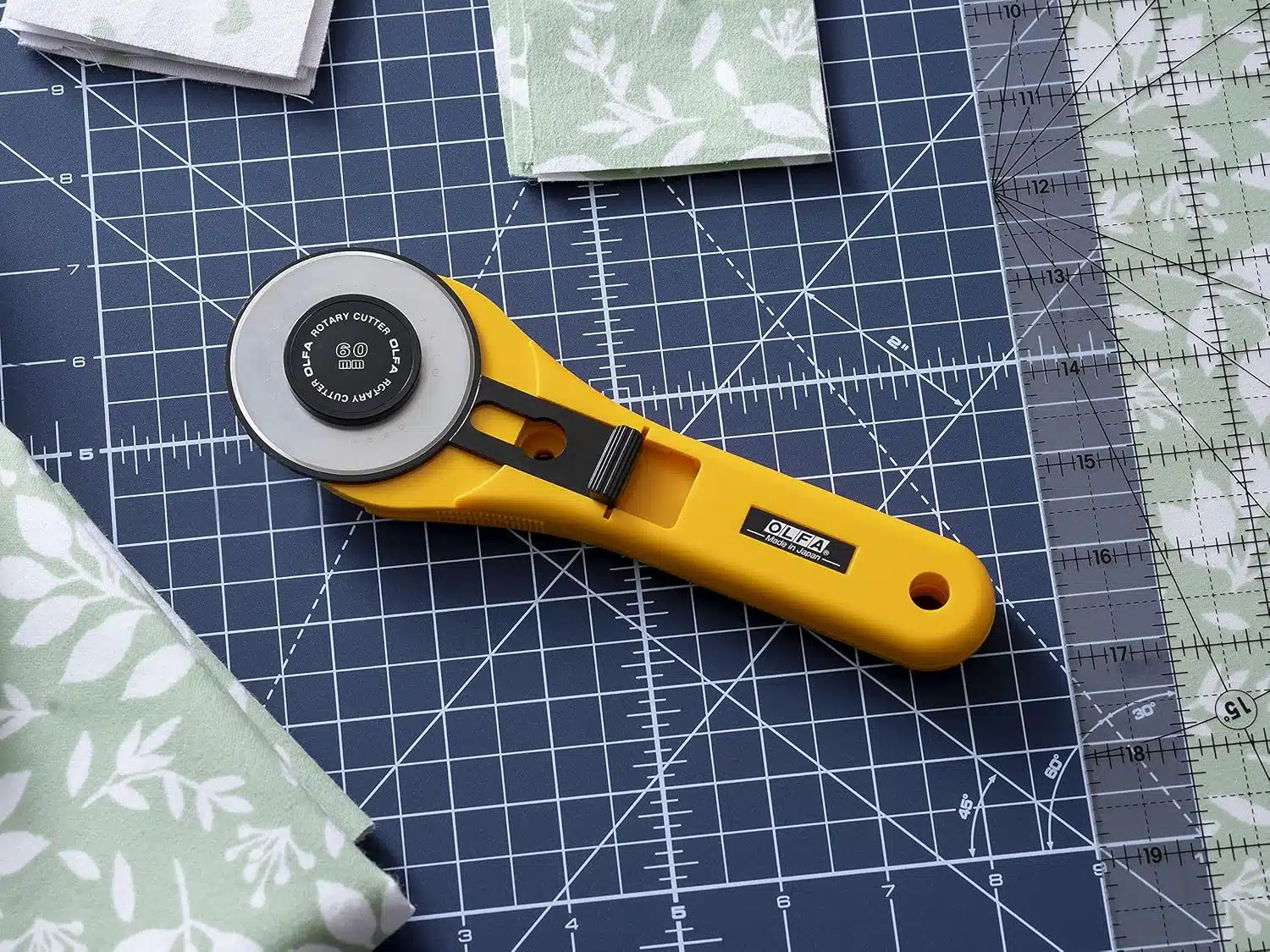
What Is a Rotary Cutter?
A rotary cutter is a cutting tool with a round blade, a lot like a pizza cutter. You roll it along the edge of a ruler to slice through fabric in one smooth motion.
Rotary cutters are perfect for:
- Cutting quilt pieces and strips
- Squaring up fabric
- Cutting binding strips
- Cutting straight edges for pillowcases, napkins, and tote bags
- Cutting several layers of fabric at once
- Trimming slippery fabrics that shift under scissors
Rotary Cutter Blade Sizes
28mm Blade
A small blade that’s great for cutting curves, small pieces, and around pattern pieces.
Best for: curves, appliqué, small projects
45mm Blade
The most popular size and the best choice for beginners. It handles most fabrics and cuts up to about four layers.
Best for: quilting, everyday sewing, cotton and flannel
60mm Blade
A large blade for cutting through many layers or thick fabrics.
Best for: denim, canvas, fleece, stacked layers
Tip: If you’re only buying one, start with a 45mm rotary cutter.
Amazon Picks: 45mm rotary cutter, replacement blades
Tools You Need to Use a Rotary Cutter
A rotary cutter works as part of a team. You’ll need three things:
A Self-Healing Cutting Mat
Never use a rotary cutter directly on a table. A self-healing cutting mat protects your table and keeps your blade sharp. The cuts close back up, so the mat lasts for years with good care.
Want your mat to last? Read How to Care for a Rotary Cutter Self-Healing Cutting Mat.
A Clear Acrylic Ruler
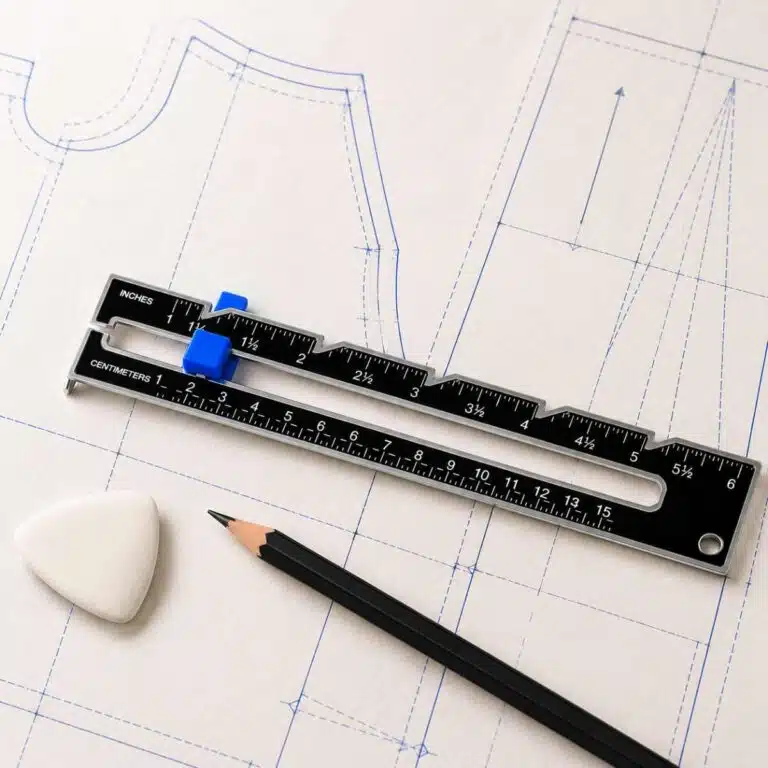
A thick, clear quilting ruler guides your blade in a straight line. A 6 x 24 inch ruler is the most useful size for beginners.
Extra Blades
A dull blade skips threads and makes you press harder. Keep a spare blade on hand.
Amazon Picks: cutting mat, 6 x 24 ruler
How to Use a Rotary Cutter Step by Step
- Prepare your fabric. Prewash it if needed, then press it flat. A wrinkled fabric won’t cut straight.
- Lay the fabric on your mat. Line up the folded edge with one of the horizontal grid lines.
- Square up the edge. Place your ruler near the raw edge and trim off a thin strip so you have a clean, straight edge to measure from.
- Measure your cut. Line up the ruler’s markings with the clean edge of your fabric.
- Hold the ruler firmly. Spread your fingers on top of the ruler, keeping them well away from the edge.
- Open the blade and place it against the ruler. Hold the cutter at about a 45-degree angle, with the blade snug against the ruler’s edge.
- Cut away from your body. Push the cutter forward in one smooth motion, using steady, even pressure.
- Close the blade right away. Make this a habit every single time you set the cutter down.
Tip: Stand up while you cut. You’ll have better control and see the ruler line more clearly.
Rotary Cutter Safety Tips
A rotary cutter blade is extremely sharp. These habits will keep your fingers safe:
- Always close the blade when you set it down, even for a second
- Always cut away from your body
- Keep your fingers away from the ruler’s edge
- Store your cutter out of reach of children
- Wrap old blades in tape before throwing them away
- Consider a cut-resistant glove for your ruler hand
Amazon Picks: cut-resistant glove, blade disposal case
How to Change a Rotary Cutter Blade
- Close the blade and lay the cutter on a flat surface.
- Unscrew the nut on the back of the cutter. Line up the parts in the order you remove them.
- Carefully lift out the old blade by the center, not the edges.
- Place the new blade in the same spot, facing the same direction.
- Put the parts back in order and tighten the nut just enough that the blade turns smoothly.
It’s time for a new blade when your cutter starts skipping threads or you have to press hard to cut.
Using a Rotary Cutter on Different Fabrics
Cotton
Cotton is the easiest fabric to rotary cut. See How to Sew Cotton Fabric for more cotton tips.
Flannel
Flannel can shift, so starch it lightly and cut one layer at a time when matching plaids. Learn more in our guide to sewing flannel.
Knits and Slippery Fabrics
A rotary cutter is actually better than scissors here, because the fabric stays flat on the mat while you cut. Use pattern weights instead of pins.
Thick Fabrics
For denim, canvas, or fleece, use a 60mm blade and make sure it’s fresh.
Common Mistakes When Using a Rotary Cutter
Leaving the Blade Open
This is the number one cause of rotary cutter injuries. Close it every time.
Cutting Toward Yourself
If the blade slips, it comes right at you. Always cut away from your body.
Using a Dull Blade
A dull blade makes you press harder, which makes slips more likely. Change it as soon as it starts skipping.
Cutting Without a Mat
Cutting on a table or a cardboard sheet ruins your blade and your table.
Going Back and Forth
Sawing back and forth creates jagged edges. Use one smooth, forward stroke.
Storing the Mat Wrong
A cutting mat stored standing up or in the heat can warp. Store it flat and away from sunlight. Our cutting mat care guide has more tips.
Is a Rotary Cutter Good for Beginners?
Yes! Once you learn how to use a rotary cutter safely, you’ll find it’s easier and faster than scissors. Start with a 45mm cutter, a medium-size mat, and a 6 x 24 inch ruler. Practice on scrap fabric first, and cut a few simple strips before starting a real project.
Easy projects to practice your rotary cutting:
- Pillowcases
- Cloth napkins
- Fabric strips for a simple quilt
- Binding strips
- Potholders
Frequently Asked Questions
What size rotary cutter is best for beginners?
A 45mm rotary cutter is the best all-around size for beginners.
Do I need a special mat for a rotary cutter?
Yes. Use a self-healing cutting mat. Cutting on any other surface will dull the blade and damage your table.
How many layers can a rotary cutter cut?
A 45mm blade cuts up to about four layers of cotton. A 60mm blade can cut more.
How often should I change my rotary cutter blade?
Change it when it skips threads or you need to press hard. For regular sewists, that’s often every few months.
Can I use a rotary cutter without a ruler?
You can cut curves freehand, but for straight lines, always use a ruler.
Final Thoughts
A rotary cutter is one of the best tools you can add to your sewing room. Remember the big three: always use a mat, always cut away from yourself, and always close the blade. Once you get the hang of it, you’ll wonder how you ever sewed without one!
Do you use a rotary cutter, or are you still team scissors? Let me know in the comments!