
Choosing the right fabric can make or break a sewing project. Some fabrics are soft and beginner-friendly, while others shift, fray, stretch, or create bulky seams that can quickly frustrate new sewists.
The good news? Every fabric becomes easier to sew once you understand how it behaves.
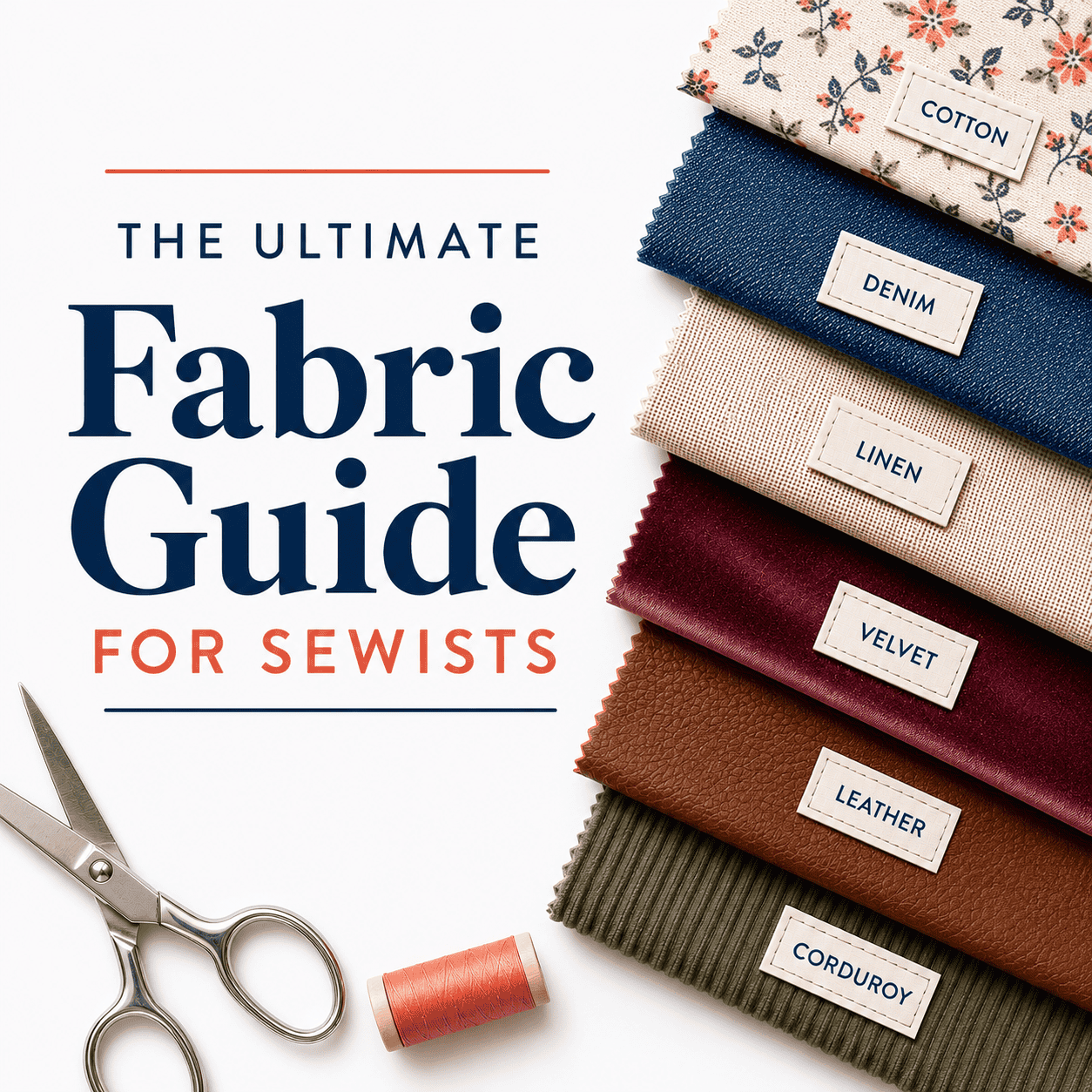
In this ultimate fabric sewing guide, you’ll learn beginner-friendly tips for sewing different fabric types, including cotton, linen, denim, velvet, corduroy, and more. You’ll also discover which fabrics are easiest for beginners, which tools work best, and how to avoid common sewing mistakes.
Whether you’re sewing clothing, quilts, bags, home décor, or gifts, this guide will help you feel more confident choosing and sewing fabric successfully.
Quick Fabric Sewing Tips
- Always prewash fabric before sewing
- Use the correct sewing machine needle
- Press the fabric before cutting
- Test stitches on scraps first
- Finish seam allowances when needed
- Use quality thread
- Match your needle and thread to the fabric type
Why Different Fabrics Sew Differently
Every fabric behaves differently because of:
- Fiber content
- Fabric weave
- Weight
- Stretch
- Texture
- Surface finish
For example:
- Cotton is stable and beginner-friendly
- Linen wrinkles and frays easily
- Denim creates bulky seams
- Velvet shifts because of pile
- Knits stretch during sewing
Learning how fabrics behave helps you choose better tools, stitches, and techniques for each project.
Easiest Fabrics for Beginner Sewists
Some fabrics are much easier for beginners to handle than others.
Best Beginner Fabrics
- Quilting cotton
- Cotton poplin
- Linen
- Cotton-linen blends
- Lightweight canvas
- Flannel
These fabrics are:
- Stable
- Easy to cut
- Easier to press
- Less slippery
- More forgiving during sewing
Hardest Fabrics to Sew
Some fabrics require more patience and specialized techniques.
More Challenging Fabrics
- Velvet
- Chiffon
- Satin
- Stretch knits
- Sequins
- Faux leather
These fabrics may:
- Shift easily
- Stretch unpredictably
- Fray heavily
- Mark easily
- Require specialty needles or presser feet
However, even difficult fabrics become manageable with practice.
Fabric Sewing Difficulty Guide
| Fabric Type | Difficulty Level | Common Challenges |
|---|---|---|
| Cotton | Easy | Wrinkling, fraying |
| Linen | Easy | Wrinkling, fraying |
| Denim | Medium | Thick seams |
| Corduroy | Medium | Nap direction |
| Velvet | Medium-Hard | Shifting, crushing pile |
| Knits | Medium-Hard | Stretching |
| Chiffon | Hard | Slipping, fraying |
| Satin | Hard | Slippery texture |
How to Choose the Right Needle for Fabric
Using the correct sewing machine needle is one of the most important parts of successful sewing.
Common Needle Types
| Needle Type | Best For |
|---|---|
| Universal Needle | Cotton, linen |
| Jeans/Denim Needle | Denim, canvas |
| Stretch Needle | Knits, stretch fabrics |
| Ballpoint Needle | Jersey, knits |
| Microtex Needle | Delicate woven fabrics |
Using the wrong needle can cause:
- Skipped stitches
- Broken needles
- Fabric damage
- Uneven seams
How to Choose the Correct Sewing Machine Needle
How to Choose the Best Thread for Fabric
Polyester all-purpose thread works well for most sewing projects because it is durable and flexible.
However, some fabrics benefit from specialty thread.
Thread Recommendations
| Fabric | Recommended Thread |
|---|---|
| Cotton | Polyester all-purpose |
| Linen | Polyester or cotton |
| Denim | Heavy-duty topstitching thread |
| Velvet | Fine polyester |
| Knits | Polyester stretch-friendly thread |
Quality thread helps improve stitch consistency and reduce lint buildup.
Why Prewashing Fabric Matters
Prewashing fabric before sewing helps:
- Prevent shrinkage
- Remove excess dye
- Soften fibers
- Remove chemical finishes
Natural fibers like cotton, linen, and denim often shrink significantly after washing.
Skipping prewashing can distort finished garments after laundering.
How to Prepare Fabric Before Sewing
Why Pressing Is Important When Sewing
Pressing fabric throughout sewing helps create:
- Flatter seams
- Cleaner edges
- Better shaping
- More professional results
Many beginners underestimate how much pressing improves sewing quality.
Different fabrics require different pressing techniques:
- Linen loves steam
- Velvet requires careful pressing
- Denim benefits from seam flattening
- Cotton presses beautifully
Importance of Pressing While Sewing
How to Prevent Fabric Fraying
Some fabrics fray heavily after cutting, especially woven fabrics.
Ways to Reduce Fraying
- Serge seam allowances
- Use zigzag stitches
- Use pinking shears
- Sew French seams
- Finish raw edges early
Fabrics that commonly fray include:
- Linen
- Denim
- Cotton
- Chiffon
Fabric Sewing Guides
Below are beginner-friendly sewing guides for popular fabric types.
How to Sew Cotton Fabric
Cotton is one of the easiest fabrics for beginners because it is stable, easy to cut, and easy to press.
Cotton works well for:
- Quilts
- Dresses
- Pajamas
- Tote bags
- Beginner sewing projects
Common cotton sewing challenges:
- Wrinkling
- Shrinkage
- Fraying
How to Sew Linen Fabric
Linen is breathable, durable, and perfect for clothing and home décor projects.
Linen sewing tips:
- Always prewash
- Press frequently
- Finish seam allowances
- Use sharp needles
Common linen sewing challenges:
- Wrinkling
- Fraying
- Grain shifting
How to Sew Denim Fabric
Denim is durable and stylish, but thick seams can intimidate beginners.
Denim sewing tips:
- Use denim needles
- Lengthen the stitch length
- Reduce seam bulk
- Use a strong thread
Common denim sewing challenges:
- Thick layers
- Broken needles
- Heavy seams
How to Sew Corduroy Fabric
Corduroy is known for its soft ridges called wales.
Corduroy sewing tips:
- Match nap direction
- Use longer stitches
- Press carefully
- Cut accurately
Common corduroy sewing challenges:
- Nap shading
- Seam bulk
- Flattened ridges
How to Sew Velvet Fabric
Velvet creates beautiful garments and holiday projects, but the pile can shift during sewing.
Velvet sewing tips:
- Use a walking foot
- Sew slowly
- Cut single layer
- Press carefully
Common velvet sewing challenges:
- Shifting
- Crushed pile
- Slipping layers
Sewing With Leather
Leather is a durable material made from animal hides and is commonly used for bags, wallets, belts, jackets, home décor, and specialty garments. Unlike woven fabrics, leather does not heal when punctured, making accurate cutting and stitching especially important. Sewing leather often requires specialty needles, clips instead of pins, and adjustments to your sewing machine to help the material feed smoothly. While it can seem intimidating at first, learning a few simple techniques can make leather projects much more manageable.
👉 Read our complete guide to sewing with leather
Best Fabrics for Different Sewing Projects
| Sewing Project | Best Fabric Choices |
|---|---|
| Beginner Sewing | Cotton, linen |
| Bags | Denim, canvas |
| Dresses | Cotton lawn, linen, rayon |
| Jackets | Denim, corduroy |
| Home Décor | Canvas, cotton, linen |
| Holiday Sewing | Velvet, corduroy |
| Quilting | Quilting cotton |
Common Fabric Sewing Mistakes
Skipping Fabric Preparation
Always prewash and press fabric before cutting.
Using the Wrong Needle
Different fabrics require different needles. Universal doesn’t mean it can sew all fabrics.
Ignoring Grainlines
Cutting off grain can distort garments.
Sewing Too Quickly
Slow sewing improves accuracy, especially on difficult fabrics. If your machine has an adjustment setting for speed, use it while you learn to control your speed with the foot pedal.
Not Testing Stitches
Testing stitches on scraps prevents later tension issues. Take a piece of the fabric you plan to use for the actual project and test the stitches you plan to use. Making changes to tension, stitch length, and width here will help your finished project turn out better.
Frequently Asked Questions
What is the easiest fabric for beginners to sew?
Cotton is usually considered the easiest fabric for beginners because it is stable, easy to cut, and easy to press.
What fabric is hardest to sew?
Chiffon, satin, velvet, and slippery stretch fabrics are often considered more difficult to sew.
Should fabric always be prewashed before sewing?
Most fabrics should be prewashed to prevent shrinkage and remove excess dye or finishes.
Why does fabric fray while sewing?
Woven fabrics fray because fibers loosen along raw cut edges.
What is the best fabric for beginner clothing projects?
Cotton poplin, quilting cotton, and linen are excellent beginner fabric choices.
Ready to Improve Your Sewing Skills?
If you’re ready to build confidence and learn sewing step-by-step, check out our beginner-friendly sewing classes at Let’s Learn To Sew. Our courses make sewing and pattern making easy with detailed lessons, fabric tutorials, and projects designed for every skill level.
More Beginner Sewing Resources
You may also enjoy learning:
- Sewing Machine Needle Guide
- How to Choose Thread
- Importance of Pressing While Sewing
- Sewing Machine Feet Guide
- How to Finish Seam Allowances
Give a Variety of Fabrics a Try!
Learning how different fabrics behave is one of the biggest steps toward becoming a more confident sewist. While every fabric has unique challenges, understanding proper needles, thread, stitch settings, and preparation techniques makes sewing much easier and more enjoyable.
Whether you’re sewing cotton, linen, denim, velvet, or corduroy, building fabric knowledge will help improve your projects, reduce frustration, and expand your sewing skills over time.



I can’t read this article because you want me to sign up for Kit. I don’t want or need another pay subscription. I just want to read the article. Your newsletter is not free when I can’t read them without a paid subscription.
The article is free, it must be an issue with a plugin. I’ll get it taken care of.